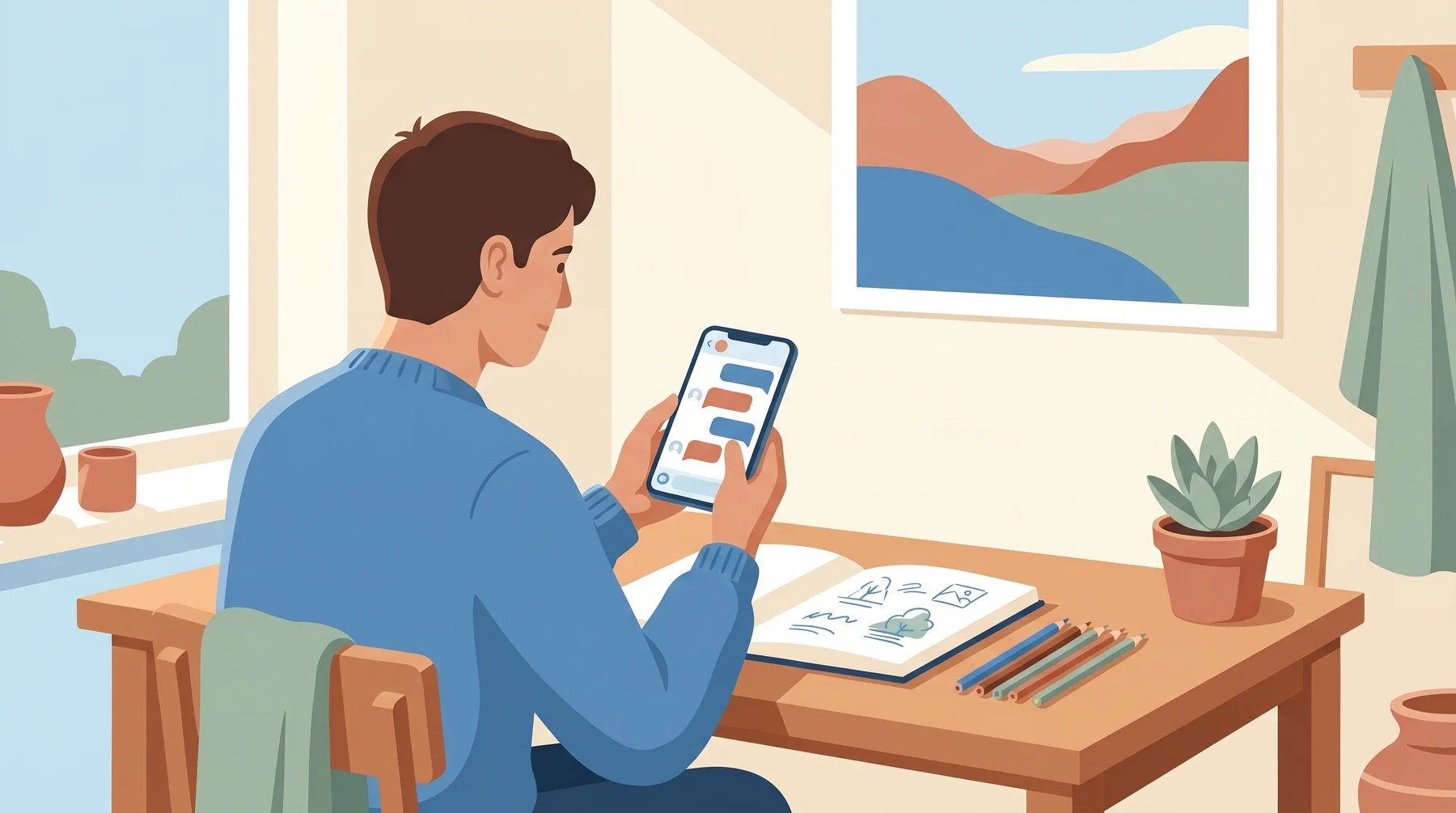
If you post art on Instagram, you’ve probably already gotten a DM from a “curator” or a “gallery” offering to feature your work. Some of those are real. Most aren’t. The scam has evolved past the old NFT pitch into something harder to spot. Here’s what it looks like now and the one question that stops every version.
Who is Affected?
Illustrators, painters, ceramicists, photographers, and any artist who posts work publicly on Instagram or TikTok
Artists with small to mid-size followings (around 1,000 to 50,000). Big enough to look legitimate to steal from. Small enough that a flattering DM feels meaningful.
Artists who are actively trying to grow and are receptive to curator attention
Newer artists who haven’t seen the pattern yet
Artists running a small Shopify, Etsy, or personal storefront alongside Instagram
If your art is online, assume these DMs are coming for you. Not a question of if.
How the Scam Works
The pitch varies. The trap is always one of three things.
Version 1: The “gas fees” version. A curator says they want to feature your work in a digital gallery, an NFT collection, or a “blockchain exhibition”. They say the platform charges you a one-time “gas fee” or “minting fee”, usually $200 to $500 in cryptocurrency. Once paid, they disappear. There’s no gallery.
Version 2: The fake verification version. A polite “gallery” or “brand” says they want to commission work. Before they can send the contract, they need you to “verify your artist account” through a link they provide. The link is a fake Instagram or Meta login. They steal your account and then use it to run more scams on your followers.
Version 3: The overpayment version. A “client” commissions a piece. They “accidentally” send too much money or send a fake payment screenshot showing more than agreed. They ask you to refund the difference. The original payment never arrives, or it gets reversed days later. You’re out whatever you refunded.
What to Look Out For
A DM that opens with extreme flattery about your work followed by an “opportunity”
Any ask for money up front, especially in cryptocurrency, gas fees, or gift cards
Any “verification” process that requires you to click a link from the DM
A “gallery” with a very new Instagram account or almost no followers of their own
Contact only by Instagram DM. Real galleries, commissions, and curators use email, their own website, and have a paper trail.
A “brand” that can’t send you a real website for the company you supposedly work with
A payment screenshot instead of an actual bank transfer
Pressure to move fast, meet a deadline, or confirm “before the slot fills”
Offers to pay you more than you asked for, ever, for any reason
How to Stay Safe
Never pay to be featured. Real galleries and curators pay you, or feature you for free. They do not charge you for the opportunity. Any request for a “fee” from you to them is a scam.
Don’t click login links from DMs. If a brand asks you to log in to anything, open a new browser tab and go there yourself.
Verify the gallery or brand outside of Instagram. Look up their real website. Check LinkedIn. Search their name in news articles. A legit operation has more than one Instagram account worth of presence.
Ask the question that breaks the spell: “Can you send this in email from your company address?”. Scammers stay on Instagram DMs because it’s the only place they can disappear cleanly. Real curators are happy to move to email.
Secure your Instagram account. Settings → Accounts Center → Password and Security → Two-factor authentication. Use the authenticator-app option if you can. Our free course Simple Strategies to Be Secure Online walks through setup.
Never send crypto or gift cards to someone you met online. This is the red line. Period.
If you already paid. Cryptocurrency is gone for good. For credit-card or PayPal payments, dispute the charge immediately. If your Instagram account got taken over, start recovery at instagram.com/hacked.
Check haveibeenpwned.com for your email and change any reused passwords.
Report the scam. In Canada, the Canadian Anti-Fraud Centre at 1-888-495-8501. In the US, the FBI’s IC3. Report the Instagram account directly through the three-dot menu on their profile.
Conclusion
Artists are natural targets for this because the premise of the DM (“I love your work”) is the exact thing you’re hoping to hear. That’s not your fault. It’s the reason the scam works. The one habit that defeats every version: pause, ask for email from a company address, and verify the gallery or brand outside of Instagram before you send or click anything. Real opportunities survive that five-minute check. Scams don’t.
If you got one of these DMs and aren’t sure whether to reply, paste the gallery name or the message text into Dave. He can look up whether it’s a known scam and walk through the red flags with you. For the bigger picture on how these scams work, our free course How Not to Get Phished walks through the same 4-step check.
Know another artist? Forward this. This scam is aimed at creative communities specifically, and most of them haven’t seen the new version.
Keep reading
No One From Google Will Call You About Your Account
A caller sent a real Google sign-in prompt to my phone and said he had all my passwords. He had none of them. He needed me to tap Yes.
Fake Bank Calls That Also Steal Your Voice
A bank call that sounds completely real is now doing two jobs at once: trying to drain your account, and recording your voice so it can be cloned later.
How to Spot the Fake Jobs That Launder Money
A wave of fake job offers is aimed at students, young adults, and anyone needing extra income. The "work" is laundering stolen money. The legal trouble lands on you, not the scammer.